
Marble
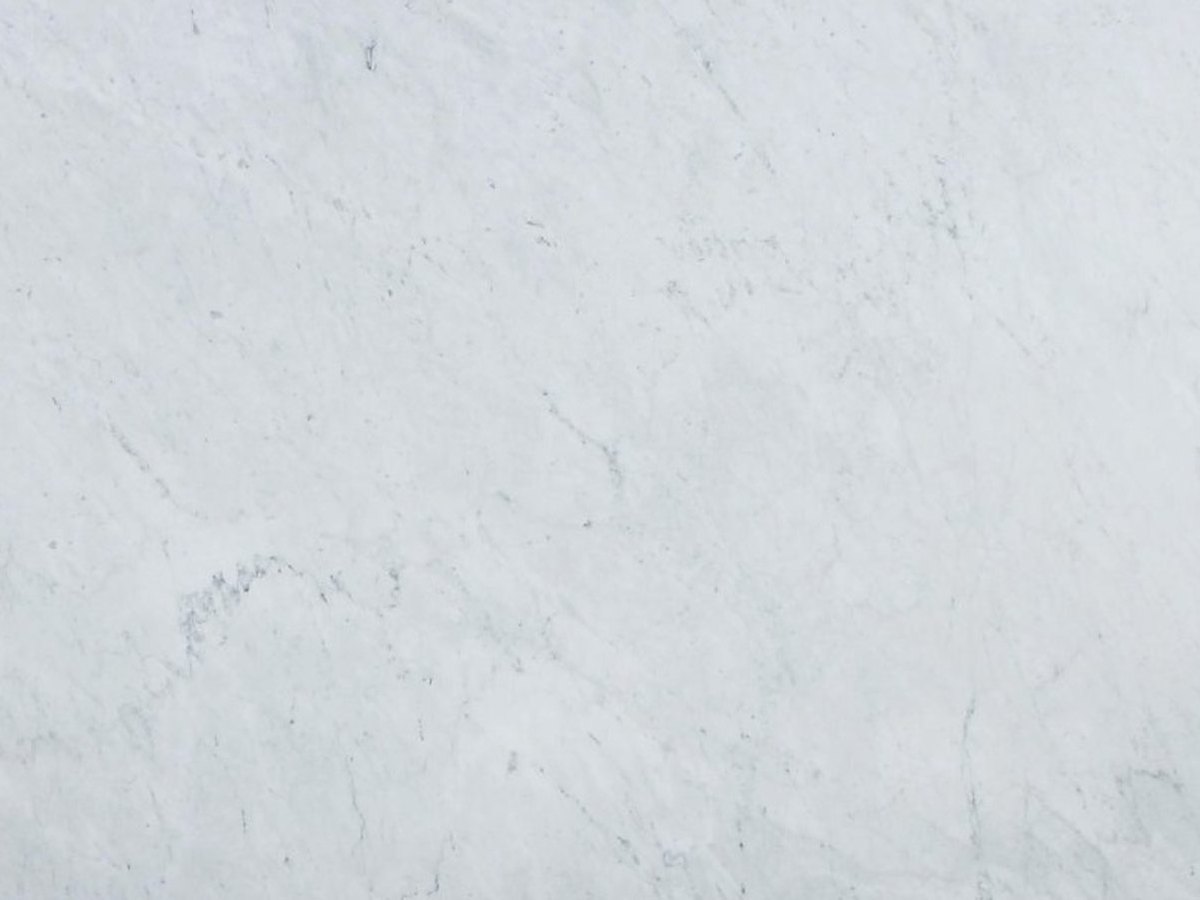
Bianco Carrara
The best-known Italian marble in the world: a pearl-white ground crossed by fine, evenly spaced grey veins.


Marble · Italy and abroad
The red of Venetian historic centres, Sicilian Diaspro and white-veined breccias: full colour, intense figure.
Dining room: Rosso Verona floor in running bond, honed finish
The slabs
Five reds photographed in the same setting at the same scale: first the three with Italian names, then the two from abroad. Sizes are those typical of the lots on the market, and they change from stone to stone: Rosso Francia, from blocks of about 260 cm, gives the shortest slabs of the group. Here colour is the product, and the differences in tone between one slab and the next are real: they have not been levelled out.

320 × 130 cm2 cm and 3 cm thick
An orange-red nodular ground, with paler cloudings and fine dark sutures between the nodules. Geologically it is a nodular limestone, Rosso Ammonitico, and a sectioned fossil ammonite sometimes turns up in the slab. It is quarried in the Valpolicella, above Verona. Honed or bush-hammered, it also goes outdoors.
Request this selection: Rosso Verona
280 × 160 cm2 cm and 3 cm thick
A deep red in vertical bands, crossed by cream veins that rise straight up and interlace towards the bottom. Despite the name it is a limestone, not a jasper: it is called that for its colour. It is quarried at Custonaci, in the province of Trapani, in blocks of variable size and limited quantities: check the lot before designing around it.
Request this selection: Diaspro di Sicilia
300 × 160 cm2 cm and 3 cm thick
A wine-red breccia, almost brown, broken into fragments by a dense net of white veins, with a few green threads of serpentine. The name comes from Levanto in Liguria, where it was quarried between Levanto and Bonassola; today almost all the Rosso Levanto on the market comes from eastern Türkiye, from the Elazığ area. Origin is declared lot by lot.
Request this selection: Rosso Levanto
260 × 140 cm2 cm and 3 cm thick
A vivid, mottled red, with pinkish-grey clouds and irregular white veins. In France it is Rouge Languedoc, or Incarnat: it is quarried at Caunes-Minervois in the Aude, in small-to-medium blocks, and it is the same marble as the columns of the Grand Trianon at Versailles. Limited availability.
Request this selection: Rosso Francia
280 × 160 cm2 cm and 3 cm thick
A full orange-red, with fine, irregular white and cream veins. It is quarried in the province of Alicante, Spain, and is one of the most widely traded reds. It is a heavily fractured limestone: slabs are filled and mesh-backed, and polished it performs best indoors.
Request this selection: Rosso Alicante«Red marble» brings together stones of different nature and origin, held together by colour. Rosso Verona is a nodular limestone from the Valpolicella, orange-red, and gives the historic centres of the Veneto their colour. Diaspro di Sicilia, from Custonaci, is a deep red veined with cream that Sicilian Baroque used in its inlays. Rosso Levanto is a wine-red breccia locked in by white veins: the name is Ligurian, but the stone on the market today comes almost entirely from Türkiye. From abroad come Rosso Francia, from the Languedoc, and Rosso Alicante, from Spain. A family to use with restraint: a few square metres are enough to define a room. Tone changes from block to block, and the slab is chosen by eye.
How the finish changes the stone
Installed
Stone changes with the surface it covers: on a continuous wall the figure reads in full, on a floor you walk across it. These are reference settings.

Reference renderings, not Eurostone supplies: they show the material in place, not a completed project.
Free quotation
Material selection, processing placed with the workshop equipped for that finish, packing on A-frames or in sea crates, customs documentation and shipping. One point of contact, even ten thousand kilometres away. We reply within 24 working hours.
See also
Same category or similar colour: worth comparing before you decide.
Marble
The best-known Italian marble in the world: a pearl-white ground crossed by fine, evenly spaced grey veins.
Marble
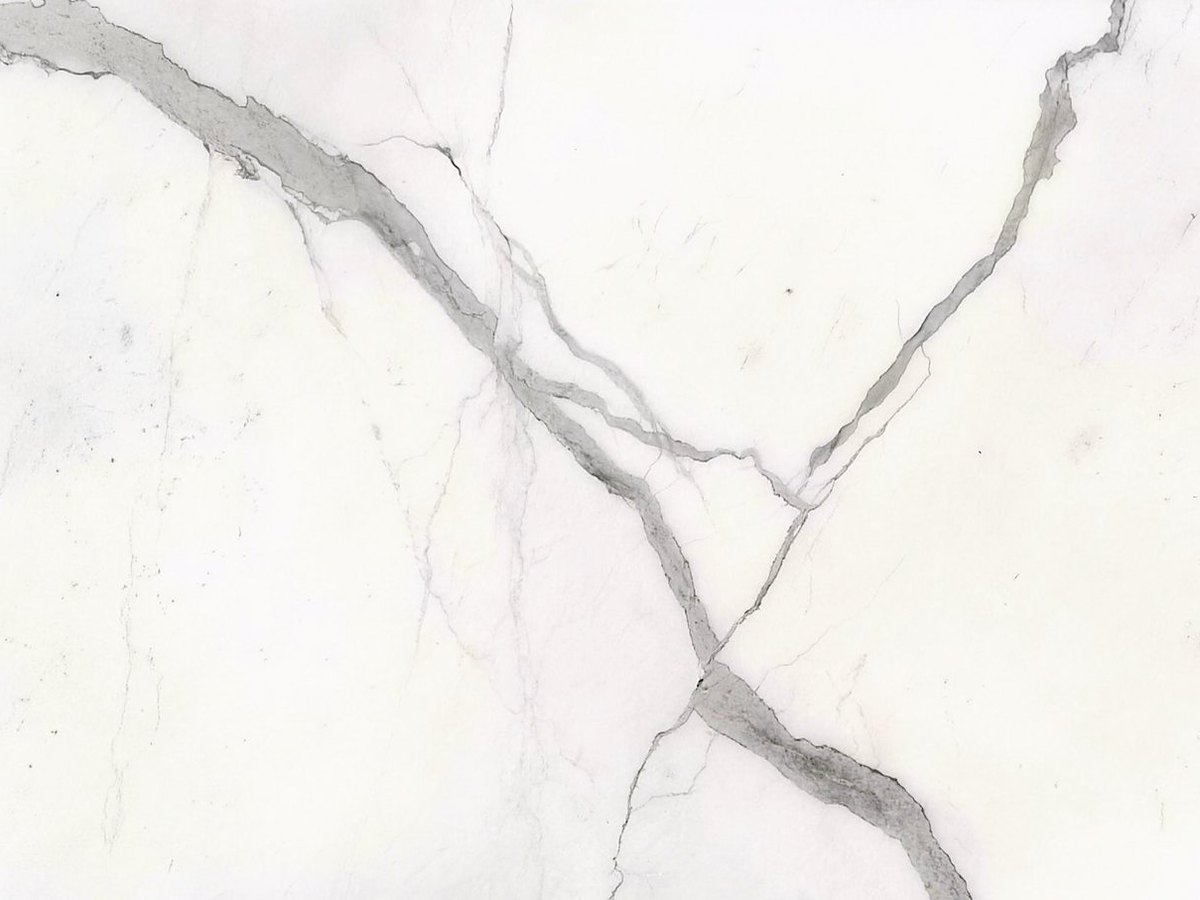
A pure white ground with bold, dramatic grey veining: the marble of classical statuary.
Marble
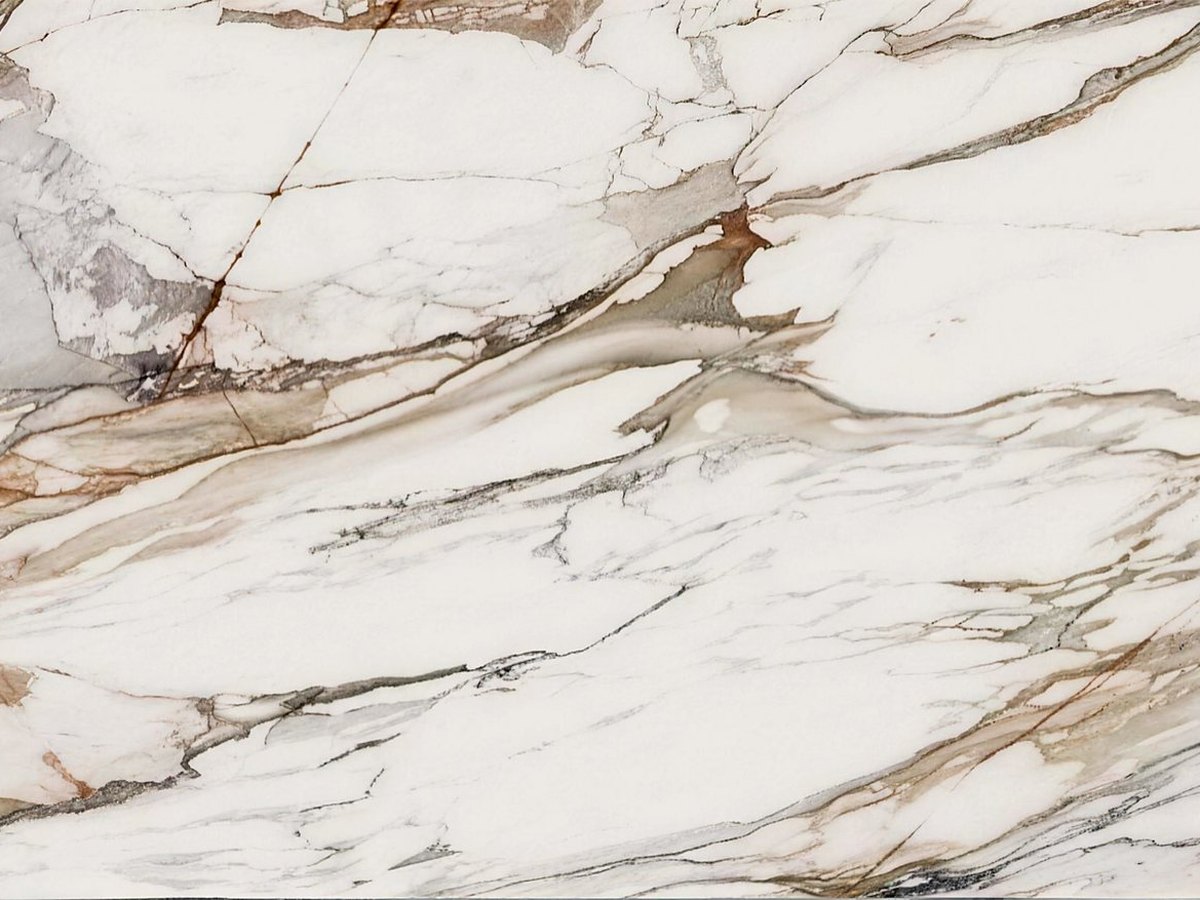
A warm white ground with broad gold, taupe and grey veining: the marble most in demand in contemporary design.