
Marble
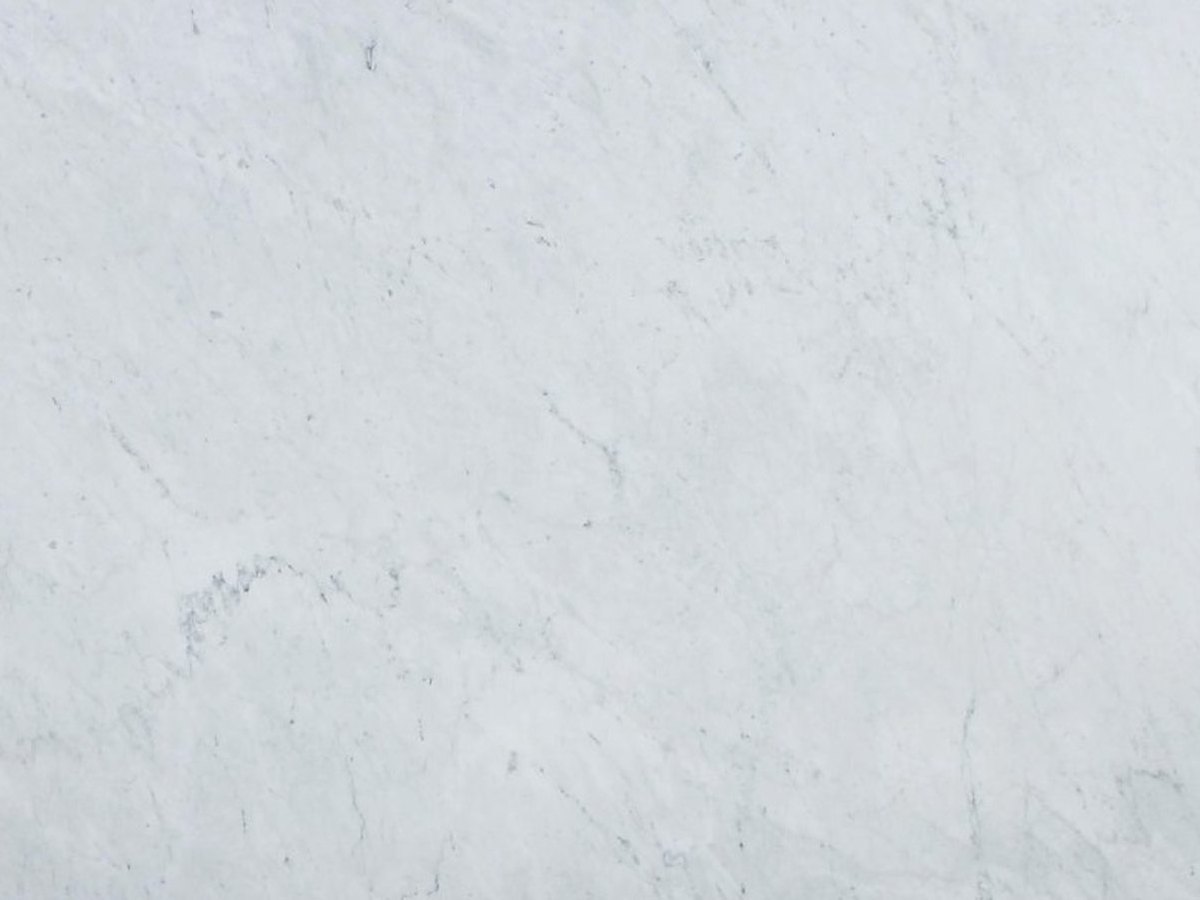
Bianco Carrara
The best-known Italian marble in the world: a pearl-white ground crossed by fine, evenly spaced grey veins.


Marble · Italy and abroad
From Portoro with its golden veins to Nero Belgio, the deepest black: the family of blacks, maximum contrast.
Kitchen: waterfall island and splashback in black marble with white veins, polished finish
The slabs
Seven blacks photographed in the same setting at the same scale: first Italian Portoro and Grand Antique from the Pyrenees, then the veined blacks, then the even blacks. Sizes are those of real lots on the market and tell the story of each stone: Portoro, from blocks of about one cubic metre, gives the smallest slabs of the group; Nero Assoluto, a granite, the largest.

200 × 145 cm2 cm and 3 cm thick
A deep black crossed by golden-yellow veins and patches and by white threads: it is the most precious of the Italian black marbles, found in the churches of Rome and at Versailles. It is quarried only on the Portovenere headland (SP), where one quarry remains active on Monte Muzzerone; the quarries on Palmaria island have been closed since 1983. Blocks are small, slabs short, and availability is checked lot by lot. Portoro of foreign origin, more plentiful and less prized, also travels under the same name.
Request this selection: Portoro
280 × 160 cm2 cm and 3 cm thick
A breccia of angular black fragments set in broad bands of white calcite: the sharpest contrast in the family. It has been quarried at Aubert, in the French Pyrenees (Ariège), since antiquity: the Romans called it marmor celticum, and it is the marble of Napoleon's tomb. The quarry, closed in 1948, was reopened in 2012 by the Italian company Escavamar, which registered the trademark «Grand Antique d'Aubert®». Black and white breccias of other origins also travel under similar names.
Request this selection: Grand Antique
305 × 157 cm2 cm and 3 cm thick
A full black with sharp white veins, fine or broad, crossing in a net: the veined black par excellence. It is quarried at Markina-Xemein in the Spanish Basque Country, and is a black bituminous limestone that takes a polish like marble. Chinese, Mexican and Moroccan stones are also sold under the same name: origin is declared lot by lot.
Request this selection: Nero Marquina
300 × 180 cm2 cm and 3 cm thick
A brownish black with a dense net of white, cream and gold veins. The name was born in France, in the Hérault, where the historic quarry gives small blocks; today most of the material on the market comes from Morocco, from the Agadir area, also as Port Laurent. Slabs are resin-treated to close micro-fissures.
Request this selection: Noir Saint Laurent
323 × 173 cm2 cm and 3 cm thick
An intense black crossed by straight, fine white and golden veins that cross in a grid. It is quarried in Tunisia, on Jebel Aziz, and is also sold as Black Aziza or Nero Dorato. Blocks are not large and the material is fragile: slabs arrive mesh-backed.
Request this selection: Sahara Noir
255 × 130 cm2 cm and 3 cm thick
The deepest and most even black of all: compact, glassy, without veins, only a few barely visible fossil traces. It is a Carboniferous limestone from Wallonia, quarried underground at Golzinne and Mazy in the province of Namur. Raw, it is grey: it turns black only when polished. Small blocks, a single quarry, and it is among the most expensive marbles in the world.
Request this selection: Nero Belgio
335 × 187 cm2 cm and 3 cm thick
An even, very fine-grained black, without figure. It is not a marble but a granite, more precisely a gabbro from Zimbabwe: very hard, almost impermeable, resistant to acids and scratches. That is why it is the black for kitchen worktops and exteriors, where a black marble would lose its polish. It is also available honed, brushed and antiqued.
Request this selection: Nero AssolutoThe family of blacks brings together very different stones, and hardly any of them is a marble in the strict sense: they are mostly black limestones, coloured by carbonaceous matter, that take a polish like marble. Portoro from Portovenere, black with golden veins, is the most precious of the Italian blacks. From the French Pyrenees comes Grand Antique, a black and white breccia used since antiquity. Then, from abroad, come the veined blacks: Spanish Nero Marquina, with white veins, Noir Saint Laurent and Sahara Noir, with gold and cream veins. Nero Belgio is the even black par excellence, rare and costly. Nero Assoluto, on the other hand, is a granite, the toughest of the family. Black marbles lose their polish outdoors and are sensitive to acids: for exteriors and kitchen worktops, granite is the choice.
How the finish changes the stone
Installed
Stone changes with the surface it covers: on a continuous wall the figure reads in full, on a floor you walk across it. These are reference settings.


Reference renderings, not Eurostone supplies: they show the material in place, not a completed project.
Free quotation
Material selection, processing placed with the workshop equipped for that finish, packing on A-frames or in sea crates, customs documentation and shipping. One point of contact, even ten thousand kilometres away. We reply within 24 working hours.
See also
Same category or similar colour: worth comparing before you decide.
Marble
The best-known Italian marble in the world: a pearl-white ground crossed by fine, evenly spaced grey veins.
Marble
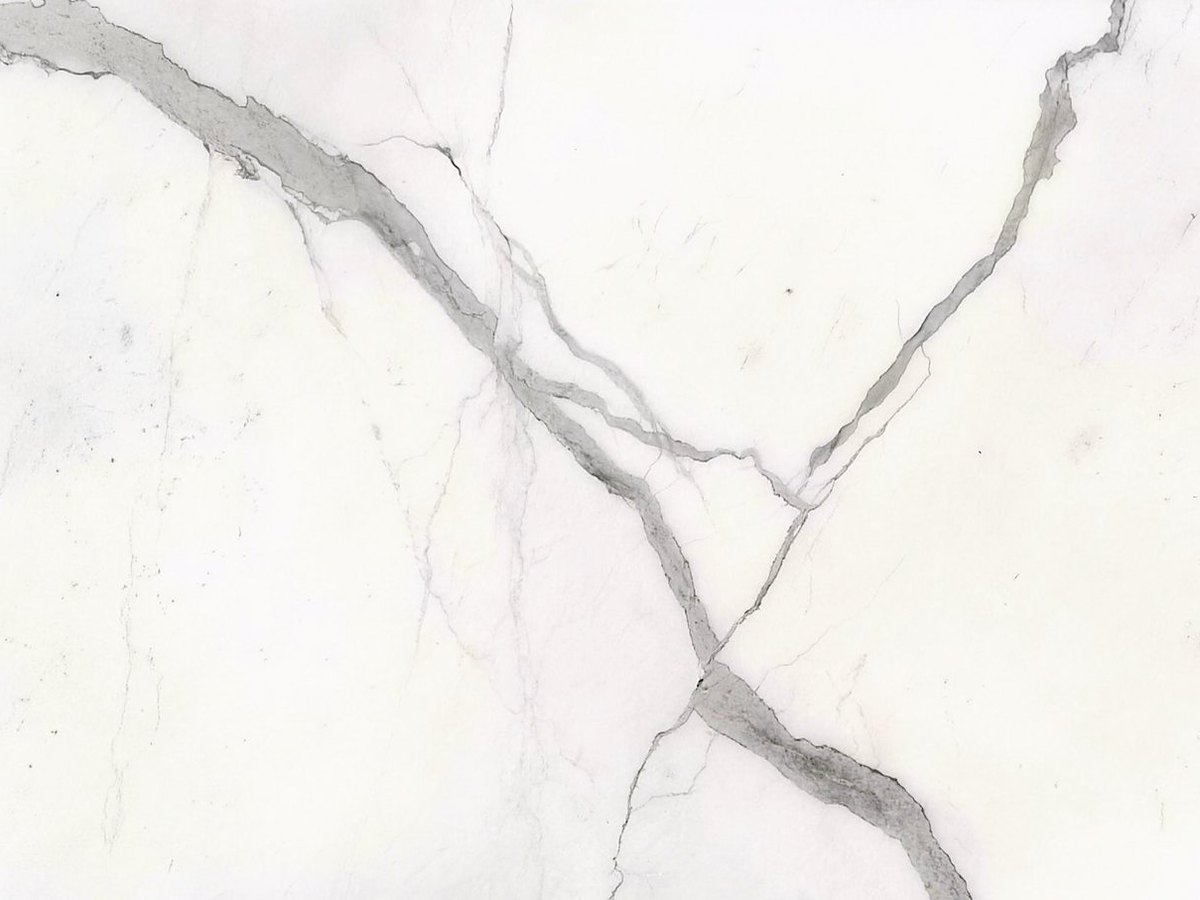
A pure white ground with bold, dramatic grey veining: the marble of classical statuary.
Marble
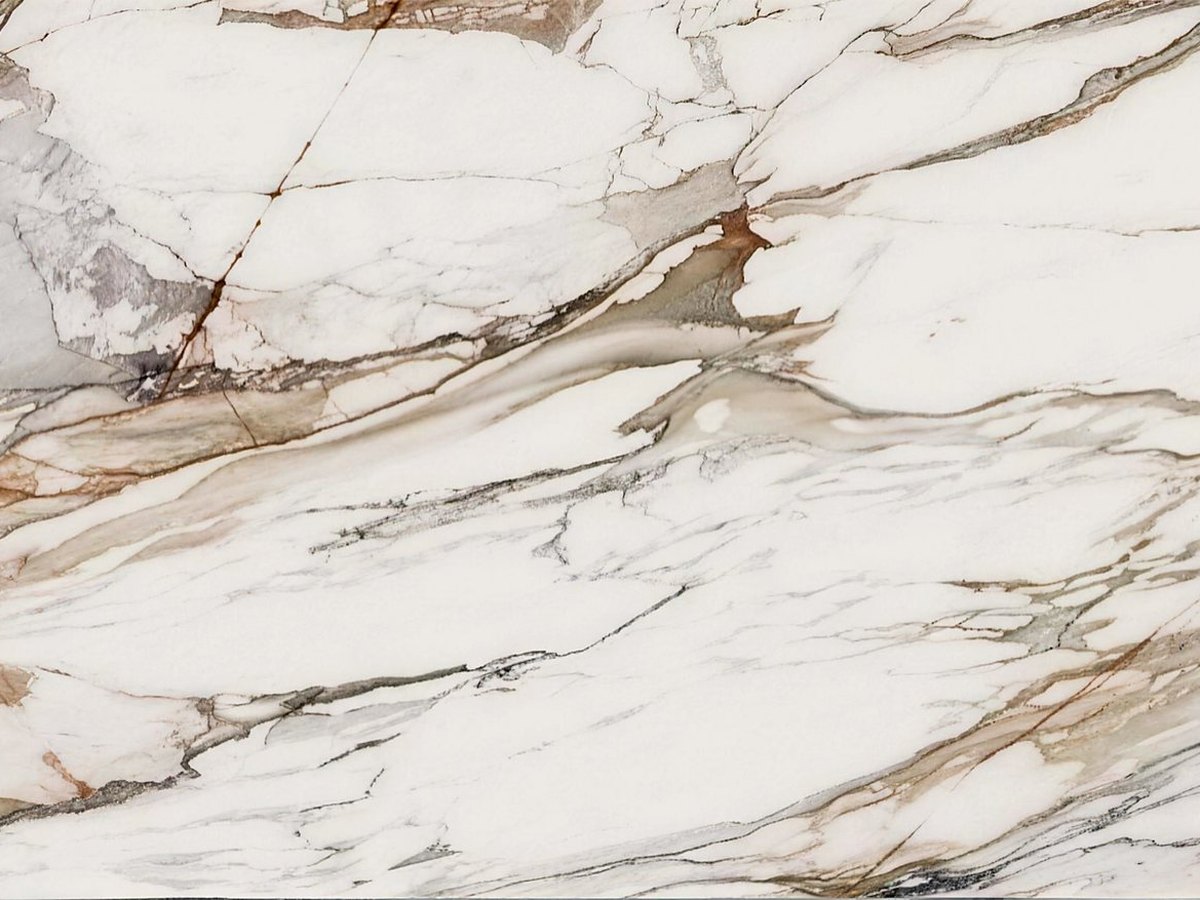
A warm white ground with broad gold, taupe and grey veining: the marble most in demand in contemporary design.